
A Motion-Preserving Surgery for Nerve Compression in the Neck
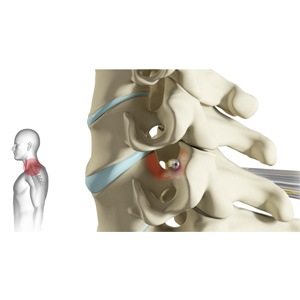
Cervical foraminotomy is a surgical procedure used to relieve pressure on a nerve in the neck (cervical spine). It is a motion-preserving alternative to fusion that can effectively treat arm pain caused by a “pinched nerve.”
This procedure is typically performed through a posterior (back of the neck) approach and is designed to create more space for the nerve as it exits the spine.
Understanding the Problem
Nerves exit the cervical spine through small openings called foramina.
When these openings become narrowed—a condition called foraminal stenosis—the nerve can become compressed.
Common causes include:
- Herniated disc
- Bone spurs (osteophytes)
- Degenerative changes in the spine
- Facet joint arthritis
This can lead to cervical radiculopathy, which may cause:
- Pain radiating down the arm
- Numbness or tingling
- Weakness in the shoulder, arm, or hand
What Is Cervical Foraminotomy?
Cervical foraminotomy is a procedure that:
- Removes bone or disc material compressing the nerve
- Enlarges the neural foramen (nerve opening)
- Relieves pressure on the affected nerve
Importantly, this procedure:
- Preserves the natural motion of the spine
- Does not require fusion in most cases
When Is Cervical Foraminotomy Recommended?
This procedure may be recommended when:
- Arm pain (radiculopathy) is persistent or severe
- Non-surgical treatments have not provided relief
- Imaging confirms nerve compression at a specific level
- There is no significant spinal instability or deformity
Non-surgical treatments often include:
- Physical therapy
- Medications
- Activity modification
- Injections
How the Procedure Is Performed
During cervical foraminotomy:
- An incision is made in the back of the neck
- Muscles are gently moved aside
- A small portion of bone and/or disc material is removed
- The nerve is decompressed
The procedure is often performed using microsurgical or minimally invasive techniques.
Benefits of Cervical Foraminotomy
Potential benefits include:
- Relief of arm pain and nerve symptoms
- Preservation of neck motion
- Avoidance of fusion
- Faster recovery compared to fusion procedures
- Smaller incision and less tissue disruption (in minimally invasive cases)
Surgical Options for Cervical Radiculopathy
Several surgical options may be used to treat a pinched nerve in the neck. The best approach depends on the location of compression, spinal alignment, and patient-specific factors.
Cervical Foraminotomy
- Posterior (back) approach
- Preserves motion
- No fusion required
- Best for lateral (foraminal) nerve compression
ACDF (Anterior Cervical Discectomy and Fusion)
- Anterior (front) approach
- Removes the disc and fuses the segment
- Provides strong stability
Often used for:
- Central disc herniation
- Multilevel disease
- Cases with instability
Cervical Disc Replacement
- Anterior (front) approach
- Removes the damaged disc and replaces it with an artificial implant
- Preserves motion at the treated level
- May reduce stress on adjacent levels
Disc replacement may be considered in select patients who have:
- Single-level disc disease
- Minimal arthritis
- No instability or deformity
Key Takeaway
- Foraminotomy preserves motion and avoids fusion through a posterior approach
- Disc replacement preserves motion through an anterior approach
- ACDF provides stability and is more broadly applicable
The optimal procedure depends on your anatomy, imaging findings, and treatment goals.
Recovery After Cervical Foraminotomy
Recovery is typically faster than fusion procedures.
General expectations include:
- Same-day or next-day discharge
- Early return to light activity
- Gradual improvement in symptoms
Typical timeline:
- Return to work: often within 2–4 weeks
- Full recovery: several weeks
Detailed recovery instructions are tailored to your procedure.
Risks and Complications
As with any surgery, potential risks include:
- Infection
- Bleeding
- Nerve injury
- Persistent or recurrent symptoms
- Neck pain
In rare cases, additional surgery may be required if symptoms recur.
Summary
Cervical foraminotomy is a motion-preserving surgical option used to treat nerve compression in the neck. By enlarging the space where the nerve exits the spine, the procedure relieves arm pain and neurological symptoms without requiring fusion. In addition to foraminotomy, cervical disc replacement and ACDF are effective surgical options depending on the underlying condition. Careful patient selection and individualized treatment planning are key to achieving the best outcomes.
Considering Cervical Foraminotomy?
If you are experiencing arm pain, numbness, or weakness due to a pinched nerve in the neck, a consultation can help determine whether cervical foraminotomy, disc replacement, or another procedure is appropriate.
Dr. Shlykov will review your imaging and develop a personalized treatment plan tailored to your condition and goals.
Schedule a consultation or Second Opinion to learn more about options.