
- Anatomy
- Conditions
- Procedures
Introduction
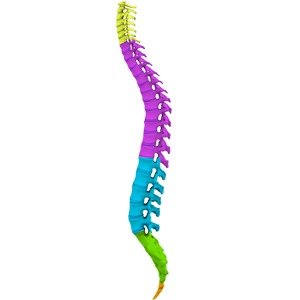
The spine, also known as the backbone, is a complex structure made up of bones called vertebrae with cushioning intervertebral discs between them. The spine provides stability and support for the body while also allowing smooth movement and flexibility. Just as importantly, it forms a protective channel for the spinal cord, which carries signals between the brain and the rest of the body.
The spine is supported by a network of muscles, ligaments, and tendons, and is connected to nerves that branch out from the spinal cord. These nerves allow us to move, feel sensation, and coordinate our body's functions.
A healthy spine is essential for everyday activities such as walking, bending, lifting, and maintaining balance. Understanding the basic anatomy of the spine can help patients better understand spine conditions and discuss treatment options with their doctor.
Vertebrae
The spine is composed of bony segments called vertebrae and fibrous structures called intervertebral discs. Together they form a column that extends from the base of the skull to the pelvis, providing both support and flexibility.
The spinal column consists of approximately 33 vertebrae stacked one on top of another. The upper 24 vertebrae are movable, while the lower vertebrae are fused together to form the sacrum and coccyx.
Each vertebra contains several important parts:
Vertebral Body
The vertebral body is the large, rounded portion at the front of the vertebra. It supports most of the body’s weight and forms the surface where intervertebral discs attach.
Pedicles
Pedicles are short, cylindrical structures that extend from the back of the vertebral body. They connect the front and back portions of the vertebra.
Lamina
The laminae are flat, arch-shaped bones that form the roof of the spinal canal, helping protect the spinal cord.
Spinous Processes
The spinous process is the bony projection that extends from the back of each vertebra. These are the bumps that can be felt when you run your hand down the middle of your back.
Transverse Processes
These are small bony projections located on the sides of the vertebra. They serve as attachment points for muscles and ligaments.
Spinal Canal
The spinal canal is the central tunnel that runs through the vertebrae and houses the spinal cord.
Facet Joints
Facet joints connect each vertebra to the vertebra above and below it. These joints allow the spine to bend, twist, and move while maintaining stability.
Intervertebral Discs
Between each pair of vertebrae lies an intervertebral disc, which acts as a cushion and shock absorber for the spine.
Each disc consists of:
- Annulus fibrosus – a tough outer ring of fibrous tissue
- Nucleus pulposus – a soft gel-like center that absorbs pressure
These discs allow the spine to move smoothly while helping distribute the forces placed on the spine during activities such as walking, lifting, and bending.
With aging or injury, discs can degenerate or herniate, which may cause pain or nerve compression.
Regions of the Spine
The spine is divided into five regions, each serving a specific function.
Cervical Spine (Neck)
The cervical spine contains seven vertebrae (C1–C7) and begins at the base of the skull. This region supports the weight of the head and allows a wide range of motion. The first two vertebrae, called the atlas and axis, allow the head to rotate and nod.
Thoracic Spine (Upper and Mid Back)
The thoracic spine consists of twelve vertebrae (T1–T12). These vertebrae connect with the ribs and help protect the heart and lungs. This region is generally less mobile than the neck and lower back.
Lumbar Spine (Lower Back)
The lumbar spine contains five large vertebrae (L1–L5). These vertebrae bear most of the body’s weight and are responsible for absorbing the stresses of lifting, bending, and carrying objects.
Sacrum
The sacrum is formed by the fusion of five vertebrae into a single bone. It connects the spine to the pelvis and helps transfer weight from the spine to the hips.
Coccyx
The coccyx, or tailbone, consists of four small fused bones at the base of the spine. It provides attachment points for ligaments and muscles of the pelvic floor.
Natural Curves of the Spine
When viewed from the side, the adult spine forms a natural S-shaped curve. These curves help maintain balance, distribute weight, and absorb shock during movement.
Abnormal curvature or alignment of the spine can lead to spinal deformities, which may affect posture and function.
Muscles of the Spine
Several groups of muscles support the spine and allow it to move.
Extensor Muscles
Located in the back of the spine, these muscles help us stand upright, lift objects, and maintain posture.
Flexor Muscles
Located in the front of the spine, these include the abdominal muscles, which help control forward bending and stabilize the spine.
Oblique Muscles
These muscles are located on the sides of the body and allow the spine to rotate and bend sideways.
Weak or strained muscles can place additional stress on the spine and may contribute to back pain.
Spinal Ligaments
Ligaments are strong bands of connective tissue that stabilize the spine and hold the vertebrae together.
Important spinal ligaments include:
- Anterior longitudinal ligament
- Posterior longitudinal ligament
- Ligamentum flavum
These ligaments help maintain proper spinal alignment and limit excessive movement between vertebrae.
Spinal Cord and Nerves
The spinal cord extends from the brain through the spinal canal and carries signals between the brain and the body. It is protected by the vertebrae and surrounded by fluid and membranes called the meninges.
A total of 31 pairs of spinal nerves branch off from the spinal cord and exit between the vertebrae. These nerves control movement and sensation in different parts of the body.
When nerves become compressed or irritated—such as from a herniated disc or spinal stenosis—patients may experience pain, numbness, tingling, or weakness.
Summary
The spine is a complex structure made up of bones, joints, discs, muscles, ligaments, nerves, and the spinal cord. Together, these components provide stability, flexibility, and protection for the nervous system.
Maintaining spinal health is essential for mobility, posture, and overall quality of life.