

A Motion-Preserving Surgery for Spinal Cord Compression
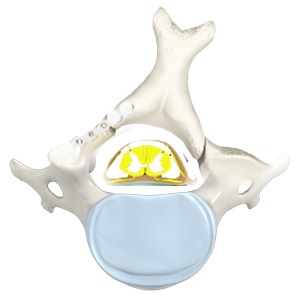
Cervical laminoplasty is a surgical procedure used to treat spinal cord compression in the neck (cervical myelopathy). Unlike fusion procedures, laminoplasty is designed to decompress the spinal cord while preserving motion in the cervical spine.
This procedure is most commonly used for patients with multilevel cervical spinal stenosis where the goal is to relieve pressure on the spinal cord without permanently stiffening the neck.
Understanding the Problem
The cervical spine houses the spinal cord, which carries signals between the brain and the rest of the body.
With aging and degeneration, several changes can narrow the spinal canal and compress the spinal cord:
- Thickened ligaments
- Bone spurs (osteophytes)
- Bulging or degenerative discs
- Congenital narrowing of the spinal canal
This condition is called cervical spinal stenosis and can lead to cervical myelopathy, which may cause:
- Difficulty with balance or walking
- Hand clumsiness or loss of dexterity
- Numbness or weakness in the arms or legs
- Coordination problems
Spinal cord compression often progresses over time and may require surgical treatment to prevent worsening.
What Is Cervical Laminoplasty?
Cervical laminoplasty is a posterior (back of the neck) procedure that increases the space for the spinal cord.
Instead of removing the lamina (as in laminectomy), the lamina is:
- Carefully cut and hinged open like a door
- Held in an expanded position using small plates or spacers
This “open-door” technique enlarges the spinal canal and relieves pressure on the spinal cord while preserving the natural structure of the spine.
When Is Laminoplasty Recommended?
Cervical laminoplasty is typically considered in patients who have:
- Multilevel cervical spinal stenosis
- Cervical myelopathy (spinal cord dysfunction)
- Compression across several levels of the cervical spine
- Preserved spinal alignment (no significant kyphosis or instability)
It is often preferred when the goal is to decompress the spinal cord without performing a fusion, particularly in patients who wish to maintain motion.
How the Procedure Is Performed
During cervical laminoplasty:
- An incision is made in the back of the neck
- The muscles are gently moved aside to expose the spine
- The lamina is partially cut and hinged open
- Small plates or spacers are used to keep the canal expanded
- The spinal cord is decompressed across multiple levels
The number of levels treated depends on the extent of spinal cord compression.
Benefits of Cervical Laminoplasty
Potential advantages of laminoplasty include:
- Effective decompression of the spinal cord
- Preservation of neck motion (no fusion required)
- Avoidance of fusion-related complications
- Ability to treat multiple levels through one approach
For appropriately selected patients, laminoplasty provides a balance between decompression and motion preservation.
Recovery After Laminoplasty
Recovery varies depending on the individual, but general expectations include:
- Hospital stay of 1–2 days in many cases
- Early mobilization and walking
- Gradual return to daily activities
Patients may experience:
- Neck soreness or muscle stiffness
- Temporary decrease in range of motion
- Gradual improvement in neurological symptoms
Recovery of spinal cord function (such as balance or coordination) may take time and may be incomplete depending on the severity and duration of compression.
Risks and Considerations
As with any spine surgery, laminoplasty carries potential risks, including:
- Infection
- Bleeding
- Nerve or spinal cord injury
- Neck pain or stiffness
- Reduced range of motion
- C5 nerve palsy (temporary shoulder weakness)
- Incomplete symptom improvement
Laminoplasty is not appropriate for all patients, particularly those with significant cervical instability or deformity.
Laminoplasty vs Laminectomy and Fusion
Both laminoplasty and laminectomy with fusion are used to treat spinal cord compression.
Key differences:
Laminoplasty
- Preserves motion
- Does not require fusion
- Best for patients with stable alignment
Laminectomy with Fusion
- Provides strong stabilization
- Preferred when there is instability or deformity
- Results in reduced motion at treated levels
The choice depends on spinal alignment, stability, and individual patient factors.
Summary
Cervical laminoplasty is a motion-preserving surgical option for treating multilevel spinal cord compression in the neck. By expanding the spinal canal rather than removing or fusing structures, laminoplasty relieves pressure on the spinal cord while maintaining movement. It is an excellent option for carefully selected patients with cervical stenosis and myelopathy who have stable spinal alignment.
Considering Cervical Laminoplasty?
If you have been diagnosed with cervical spinal stenosis or myelopathy, a consultation can help determine whether laminoplasty or another procedure is the best option.
Dr. Shlykov will review your imaging and discuss all appropriate surgical and non-surgical options to develop a personalized treatment plan.
Schedule a consultation or Second Opinion to learn more about options.