
Cervical Anatomy
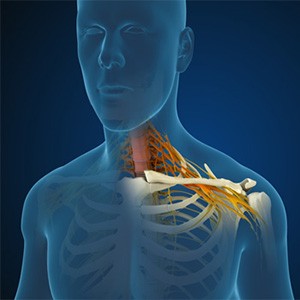
The cervical spine consists of seven vertebrae (C1–C7) that form the neck. Between each vertebra lies an intervertebral disc, which acts as a cushion and allows movement of the spine. Nerves branch off the spinal cord through small openings called neural foramina, traveling into the shoulders, arms, and hands.
These cervical nerve roots control both sensation and muscle function in the upper extremities. When one of these nerves becomes irritated or compressed, it can lead to symptoms known as cervical radiculopathy.
What is Cervical Radiculopathy?
Cervical radiculopathy occurs when a nerve root in the cervical spine becomes compressed or inflamed. This compression disrupts normal nerve function and may cause pain, numbness, tingling, or weakness that radiates from the neck into the shoulder, arm, or hand.
Cervical radiculopathy is often referred to as a “pinched nerve in the neck.”
The condition most commonly occurs due to disc herniation or degenerative changes in the cervical spine that narrow the spaces where nerves exit the spine.
Incidence and Prevalence
Cervical radiculopathy is a relatively common spinal condition.
- The annual incidence is estimated to be approximately 80–100 cases per 100,000 people.
- It most commonly occurs in adults between the ages of 40 and 60.
- Men are slightly more frequently affected than women.
Neck and arm pain related to cervical nerve compression is a common reason patients seek evaluation by primary care physicians, neurologists, and spine specialists.
Causes of Cervical Radiculopathy
Cervical radiculopathy typically occurs when a nerve root becomes compressed by surrounding spinal structures.
Common causes include:
- Cervical Disc Herniation: A herniated disc occurs when the soft center of the disc pushes through the outer ring and compresses a nearby nerve root.
- Degenerative Disc Disease: Age-related degeneration of the cervical discs can lead to narrowing of the spaces where nerves exit the spine.
- Cervical Spondylosis: Degenerative arthritis of the cervical spine may cause bone spurs (osteophytes) that compress nerve roots.
- Foraminal Stenosis: Narrowing of the neural foramen can place pressure on exiting nerve roots.
- Trauma or Injury: Whiplash injuries, falls, or sports injuries can damage discs or joints in the cervical spine and lead to nerve compression.
Symptoms of Cervical Radiculopathy
Symptoms typically occur on one side of the body and follow the distribution of the affected nerve root.
Common symptoms include:
- Neck pain
- Pain radiating into the shoulder, arm, or hand
- Numbness or tingling in the arm or fingers
- Muscle weakness in the arm or hand
- Reduced reflexes
Symptoms may worsen with neck movement, prolonged sitting, coughing, or straining.
Diagnosis of Cervical Radiculopathy
Diagnosis begins with a detailed medical history and physical examination.
During the examination, your physician may evaluate:
- Neck mobility and range of motion
- Arm strength and reflexes
- Areas of numbness or tingling
- Signs of nerve root irritation
Special maneuvers such as the Spurling test may help reproduce symptoms by gently compressing the cervical spine.
Imaging studies are often used to confirm the diagnosis, including:
- X-rays to evaluate alignment and degenerative changes
- MRI scans to visualize disc herniations and nerve compression
- CT scans to evaluate bone structures
- Electromyography (EMG) to assess nerve function
Treatment Options for Cervical Radiculopathy
Treatment depends on symptom severity, neurological findings, and the underlying cause of nerve compression.
Non-Surgical Treatment
Most patients improve with conservative treatment.
Common treatment options include:
- Anti-inflammatory medications
- Activity modification
- Physical therapy and strengthening exercises
- Cervical traction
- Epidural steroid injections
Outcomes of Conservative Care
Studies show that approximately 75–90% of patients with cervical radiculopathy improve without surgery.
Symptoms often improve over 6–12 weeks as inflammation around the nerve decreases.
However, some patients may experience recurrent symptoms, particularly when degenerative changes or foraminal narrowing remain present. In these cases, persistent or recurrent pain may ultimately require surgical treatment.
Surgical Treatment
Surgery may be recommended if:
- Symptoms persist despite several weeks to months of conservative treatment
- Significant nerve compression causes weakness or neurological deficits
- Pain severely limits daily activities
The goal of surgery is to relieve pressure on the affected nerve root and restore normal nerve function.
Common surgical options include:
- Anterior Cervical Discectomy and Fusion (ACDF): ACDF is one of the most commonly performed procedures for cervical radiculopathy. During this surgery, the damaged disc is removed from the front of the neck to relieve pressure on the nerve. The adjacent vertebrae are then fused to stabilize the spine.
- Cervical Disc Replacement: In selected patients, the damaged disc can be replaced with an artificial disc to preserve motion at that spinal level rather than performing a fusion.
- Posterior Cervical Foraminotomy: This procedure is performed from the back of the neck and involves removing bone or tissue compressing the nerve root. In many cases, it can relieve nerve pressure while preserving spinal motion.
- Posterior Cervical Laminectomy and Fusion: In cases where nerve compression involves multiple spinal levels or spinal instability, a posterior cervical laminectomy and fusion may be recommended. This procedure removes portions of the vertebral bone to decompress the spinal cord and nerves, followed by stabilization of the spine using screws and rods.
Prevention of Cervical Radiculopathy
Certain lifestyle habits may help reduce stress on the cervical spine:
- Maintain good posture, especially when working at a computer
- Take regular breaks during prolonged sitting or screen use
- Strengthen neck and upper back muscles
- Maintain ergonomic workstations
- Avoid repetitive strain on the neck
Summary
Cervical radiculopathy occurs when a nerve in the neck becomes compressed or irritated, causing pain, numbness, or weakness that may radiate into the shoulder, arm, or hand. Most patients improve with non-surgical treatment, and symptoms often resolve over several weeks. However, persistent or recurrent symptoms may require surgical treatment to relieve nerve compression and restore function.