

Minimally Invasive Treatment for Vertebral Compression Fractures
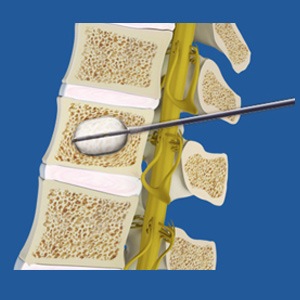
Kyphoplasty is a minimally invasive procedure used to treat vertebral compression fractures, most commonly caused by osteoporosis.
The procedure is designed to:
- Stabilize the fractured vertebra
- Reduce pain
- Restore height and alignment of the spine
Kyphoplasty can provide rapid pain relief and improved mobility, often within days.
Understanding Vertebral Compression Fractures
A vertebral compression fracture occurs when a bone in the spine collapses, often in the front portion of the vertebra.
Common causes include:
- Osteoporosis (most common)
- Trauma or injury
- Spinal tumors or metastases
- Long-term steroid use
These fractures can lead to:
- Sudden onset back pain
- Worsening pain with standing or walking
- Height loss
- Progressive forward curvature (kyphosis)
What Is Kyphoplasty?
Kyphoplasty is a minimally invasive procedure that:
- Stabilizes the fractured vertebra
- Restores some of the lost vertebral height
- Reduces pain
The procedure involves:
- Inserting a small balloon into the fractured vertebra
- Gently inflating the balloon to create space and restore height
- Filling the space with bone cement to stabilize the bone
When Is Kyphoplasty Recommended?
Kyphoplasty may be considered when:
- A compression fracture is causing significant pain
- Pain persists despite non-surgical treatment
- There is reduced mobility or function
- Imaging confirms an acute or subacute fracture
Non-surgical treatment often includes:
- Pain medications
- Bracing
- Activity modification
Kyphoplasty is typically considered when pain is severe or not improving over time.
How the Procedure Is Performed
During kyphoplasty:
- The procedure is performed under sedation or general anesthesia
- Small incisions are made in the back
- A narrow tube is inserted into the fractured vertebra
- A balloon is placed and gently inflated
- The balloon is removed and the space is filled with bone cement
- The cement hardens quickly, stabilizing the bone
The procedure is usually completed in less than one hour per level.
Kyphoplasty vs Vertebroplasty: Cement Injection and Safety
Both kyphoplasty and vertebroplasty treat compression fractures using bone cement, but they differ in how the cement is delivered, which has important safety implications.
Vertebroplasty
- Cement is injected directly into the fractured bone under higher pressure
- The bone is still collapsed, so cement is forced into small spaces
- This higher-pressure injection can increase the risk of:
- Cement leakage outside the bone
- Irritation of nearby nerves
- Rare complications such as embolization
Kyphoplasty
- A balloon is first used to create a cavity inside the vertebra
- Cement is then injected into this space under lower pressure
- The cement fills a controlled cavity rather than being forced into compressed bone
Why This Matters
Because kyphoplasty allows cement to be placed into a preformed space at lower pressure, it is generally associated with:
- Lower risk of cement leakage
- More controlled cement placement
- Potentially improved safety profile in many patients
Key Takeaway
Both procedures are effective, but kyphoplasty offers:
- Height restoration
- More controlled cement delivery
- Lower-pressure injection, which may improve safety
Benefits of Kyphoplasty
Potential benefits include:
- Rapid pain relief (often within days)
- Stabilization of the fracture
- Restoration of vertebral height
- Improved posture
- Faster return to daily activities
Many patients experience significant improvement in function and quality of life.
Recovery is typically quick.
General expectations include:
- Same-day or next-day discharge
- Walking within hours after the procedure
- Rapid reduction in pain
Most patients return to normal activities within days to weeks, depending on overall health.
Risks and Complications
Kyphoplasty is generally safe, but potential risks include:
- Infection
- Bleeding
- Cement leakage (lower risk than vertebroplasty)
- Nerve irritation or injury
- Adjacent level fractures over time
Preventing Future Fractures
Because many compression fractures are related to osteoporosis, treatment may also include:
- Bone density evaluation
- Medications to strengthen bone
- Calcium and vitamin D supplementation
- Fall prevention strategies
Addressing underlying bone health is important to reduce the risk of future fractures.
Summary
Kyphoplasty is a minimally invasive procedure used to treat painful vertebral compression fractures. By stabilizing the fracture and restoring vertebral height, kyphoplasty can provide rapid pain relief and improve mobility. Compared to vertebroplasty, kyphoplasty allows cement to be injected under lower pressure into a controlled space, which may reduce the risk of cement leakage and improve safety. In appropriately selected patients, it is an effective and reliable treatment option.
Considering Kyphoplasty?
If you have been diagnosed with a compression fracture and are experiencing persistent pain, a consultation can help determine whether kyphoplasty is appropriate.
Dr. Shlykov will perform a detailed evaluation and develop a personalized treatment plan tailored to your condition and goals.
Schedule a consultation or Second Opinion to learn more about your options.