
What Is Kyphosis?
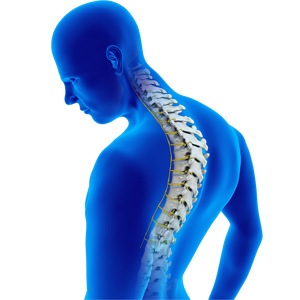
Kyphosis refers to the natural forward curvature of the spine when viewed from the side. The spine normally has several curves that help maintain balance, absorb shock, and allow efficient movement. The thoracic spine (upper back) normally has a gentle kyphotic curve, while the cervical and lumbar regions curve in the opposite direction.
Kyphosis itself is therefore a normal and important component of spinal alignment. However, when the curvature becomes excessive or develops in abnormal regions of the spine, it may lead to a spinal deformity known as hyperkyphosis, commonly referred to simply as kyphosis.
Excessive kyphosis can lead to a rounded or hunched posture and, in more severe cases, may result in pain, fatigue, imbalance, or difficulty standing upright.
Kyphosis can develop for many reasons, including degenerative changes, developmental conditions, spinal fractures, neuromuscular disorders, and complications related to spinal surgery.
The severity of kyphosis varies widely—from mild postural changes to significant spinal deformity that affects spinal balance, mobility, and quality of life.
Types and Causes of Kyphosis
Kyphosis may develop from a variety of spinal conditions.
Adult Spinal Deformity
Adult spinal deformity refers to abnormal alignment of the spine that develops or progresses in adulthood. Kyphosis may occur due to:
- Degeneration of spinal discs
- Arthritis of the facet joints
- Progressive collapse of vertebral bodies
- Loss of spinal alignment with aging
In adult spinal deformity, the spine may lose its normal alignment, leading to forward stooping posture, imbalance, and difficulty standing upright.
Patients may experience:
- Back pain
- Fatigue while standing
- Difficulty walking long distances
- Loss of overall spinal balance
Scheuermann’s Kyphosis
Scheuermann’s kyphosis is a developmental condition that typically appears during adolescence. It occurs when the front portions of several vertebrae grow more slowly than the back portions, producing wedge-shaped vertebrae and increased thoracic curvature.
This condition often becomes noticeable during teenage years and may cause:
- Rounded upper back posture
- Back pain
- Muscle fatigue
Many individuals with mild Scheuermann’s kyphosis require only observation or physical therapy, although more severe cases may require bracing or surgery.
Cervicothoracic Kyphosis
Cervicothoracic kyphosis occurs at the junction between the cervical spine (neck) and thoracic spine (upper back). This region plays a critical role in maintaining head balance and horizontal gaze.
Abnormal curvature in this area can lead to:
- Difficulty maintaining upright posture
- Neck fatigue or pain
- Forward head posture
In severe cases, cervicothoracic kyphosis can make it difficult to look forward comfortably.
Drop Head Syndrome
Drop head syndrome refers to severe forward flexion of the neck caused by weakness of the neck extensor muscles. Patients often have difficulty lifting their head and maintaining normal posture.
This condition may occur due to:
- Neuromuscular disorders
- Degenerative spinal changes
- Severe cervical deformity
Drop head syndrome can significantly affect daily activities, including walking, eating, and maintaining visual orientation.
Positional (Postural) Kyphosis
Positional kyphosis, also known as postural kyphosis, occurs when poor posture leads to excessive rounding of the upper back.
It is commonly seen in adolescents or adults who spend long periods sitting, working at computers, or using mobile devices.
Unlike structural deformities, positional kyphosis is usually flexible and may improve with:
- Postural correction
- Strengthening exercises
- Physical therapy
Proximal Junctional Kyphosis
Proximal junctional kyphosis (PJK) may develop following spinal fusion surgery when abnormal curvature develops just above the upper end of a fusion construct.
This occurs due to changes in spinal mechanics and stress at the adjacent spinal segment.
Many cases are mild and do not require treatment, but more severe cases may cause:
- Pain
- Progressive deformity
- Neurological symptoms
Distal Junctional Kyphosis
Distal junctional kyphosis (DJK) occurs at the lower end of a spinal fusion construct. It results from increased mechanical stress on spinal segments below the fusion.
In some cases, DJK can lead to progressive deformity and may require further treatment.
Kyphosis from Compression Fractures
Kyphosis can also develop following vertebral compression fractures, most commonly related to osteoporosis.
When a vertebral body collapses in the front portion of the spine, it creates a wedge-shaped deformity that increases forward curvature.
Multiple compression fractures can lead to progressive forward stooping posture, sometimes referred to as “dowager’s hump.”
Patients may experience:
- Back pain
- Height loss
- Difficulty standing upright
Other Causes of Kyphosis
Additional medical conditions may also contribute to kyphosis, including:
- Congenital spinal deformities present at birth
- Spinal infections
- Tumors involving the spine
- Neuromuscular disorders such as muscular dystrophy
- Ankylosing spondylitis and other inflammatory spine conditions
These conditions may alter spinal alignment and lead to progressive curvature.
Symptoms of Kyphosis
Symptoms depend on the cause and severity of the curvature.
Common symptoms include:
- Rounded or hunched posture
- Back pain or fatigue
- Difficulty standing upright for prolonged periods
- Muscle stiffness
- Reduced mobility
In more severe cases, kyphosis may affect:
- Balance
- Walking ability
- Overall spinal alignment
- Neurological function
Diagnosis
Diagnosis begins with a medical history and physical examination.
Your physician may evaluate:
- Spinal posture and alignment
- Flexibility of the spine
- Neurological function
- Balance and walking pattern
Imaging studies are used to evaluate spinal curvature and identify underlying causes.
Common diagnostic tests include:
- X-rays, which measure the degree of spinal curvature
- MRI scans, which evaluate the spinal cord and soft tissues
- CT scans, which provide detailed images of bone structures
Treatment
Treatment depends on the cause, severity, and symptoms of the deformity.
Non-Surgical Treatment
Mild or flexible forms of kyphosis may be treated with conservative measures such as:
- Physical therapy
- Postural training
- Core strengthening exercises
- Pain management medications
- Bracing in selected cases
These treatments aim to improve posture, reduce pain, and strengthen supporting muscles.
Surgical Treatment
Surgery may be recommended when:
- The spinal deformity is severe
- Symptoms significantly affect daily activities
- Neurological symptoms develop
- Progressive deformity occurs
Surgical treatment typically involves spinal realignment and stabilization, often using spinal fusion techniques and specialized implants to restore more normal spinal alignment.
In complex deformities, advanced surgical techniques may be required to correct spinal curvature and improve overall spinal balance.
Summary
Kyphosis refers to the natural forward curvature of the spine; however, excessive curvature can lead to a spinal deformity that affects posture, balance, and quality of life. Kyphosis may develop due to a wide range of conditions, including developmental disorders, degenerative spinal disease, vertebral compression fractures, neuromuscular conditions, and complications following spinal surgery. Treatment depends on the underlying cause and severity of the curvature and may include physical therapy, bracing, or surgical correction in more advanced cases.