
A Motion-Preserving Alternative to Spinal Fusion
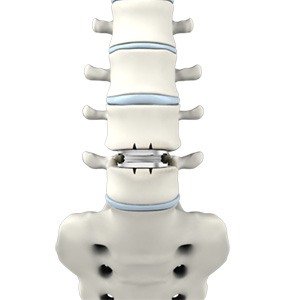
Lumbar disc replacement, also known as lumbar disc arthroplasty, is a surgical procedure used to treat degenerative disc disease in the lower back by removing a damaged disc and replacing it with an artificial implant.
Unlike fusion, which eliminates motion at a spinal segment, disc replacement is designed to preserve motion while relieving pain and restoring function.
Understanding the Problem
The lumbar spine is made up of vertebrae separated by intervertebral discs that act as cushions and allow movement.
Over time, discs can degenerate due to:
- Aging and wear and tear
- Repetitive stress
- Injury
This can lead to degenerative disc disease, which may cause:
- Chronic lower back pain
- Pain with sitting, bending, or lifting
- Reduced mobility
- Occasionally leg pain if nerve irritation is present
In some patients, the disc becomes a primary source of pain and may require surgical treatment.
What Is Lumbar Disc Replacement?
Lumbar disc replacement is a procedure that:
- Removes the damaged disc
- Replaces it with an artificial disc implant
- Preserves motion at that level of the spine
The procedure is typically performed through an anterior (front) approach, similar to an ALIF, allowing direct access to the disc space.
How the Artificial Disc Works
The artificial disc is designed to:
- Mimic the function of a natural disc
- Maintain disc height
- Allow controlled motion (flexion, extension, rotation)
- Reduce abnormal stress on surrounding structures
This helps maintain more natural spine mechanics compared to fusion.
When Is Lumbar Disc Replacement Recommended?
Disc replacement may be considered in carefully selected patients who have:
- Single-level degenerative disc disease
- Persistent back pain despite non-surgical treatment
- Minimal arthritis in the facet joints
- No significant spinal instability
- No major deformity
It is most commonly performed at L4-5 or L5-S1 levels.
Who Is Not a Candidate?
Disc replacement may not be appropriate if there is:
- Significant spinal instability or spondylolisthesis
- Advanced facet joint arthritis
- Spinal deformity
- Osteoporosis or poor bone quality
- Prior fusion at adjacent levels (in some cases)
In these situations, fusion procedures such as ALIF or TLIF may be more appropriate.
How the Procedure Is Performed
During lumbar disc replacement:
- An incision is made in the abdomen
- The spine is accessed from the front
- The damaged disc is removed
- The artificial disc is placed into the disc space
The implant is positioned to restore normal alignment and motion.
Benefits of Lumbar Disc Replacement
Potential benefits include:
- Preservation of motion at the treated level
- Relief of back pain
- Maintenance of more natural spine mechanics
- Avoidance of fusion
- Potentially reduced stress on adjacent segments
In appropriately selected patients, disc replacement can provide excellent outcomes.
Lumbar Disc Replacement vs Fusion
Both disc replacement and fusion are effective treatments, but they differ in important ways.
Disc Replacement
- Preserves motion
- Maintains more natural biomechanics
- Avoids fusion at that level
Fusion (ALIF, TLIF, Posterior Fusion)
- Eliminates motion at the treated level
- Provides strong stability
- More broadly applicable to complex conditions
Key Takeaway
- Disc replacement is best for carefully selected patients with isolated disc disease
- Fusion is preferred when stability, deformity correction, or multi-level disease is present
The decision depends on your anatomy, imaging, and treatment goals.
What the Evidence Shows
Lumbar disc replacement has been studied in randomized trials and long-term follow-up studies.
Research shows:
- Comparable or improved pain relief and function compared to fusion in selected patients
- High patient satisfaction
- Maintenance of motion at the treated level
Some studies suggest a lower rate of adjacent segment degeneration compared to fusion, although long-term differences continue to be studied.
Proper patient selection is critical to achieving good outcomes.
Recovery After Disc Replacement
Recovery is often similar to or slightly faster than fusion procedures.
General expectations include:
- Hospital stay of 1–3 days
- Early walking after surgery
- Gradual return to activity
Typical timeline:
- Light activity: within weeks
- Return to work: 2–6 weeks depending on job
- Full recovery: several weeks to months
Detailed recovery instructions are tailored to your procedure.
Risks and Complications
Potential risks include:
- Infection
- Bleeding
- Nerve injury
- Injury to blood vessels
- Implant malposition or failure
- Persistent symptoms
- Need for revision surgery
Dr. Shlykov will discuss these risks and determine whether disc replacement is appropriate for your condition.
Summary
Lumbar disc replacement is a motion-preserving surgical option for treating degenerative disc disease in the lower back. By replacing the damaged disc with an artificial implant, the procedure relieves pain while maintaining movement at that level of the spine. In carefully selected patients, lumbar disc replacement can provide excellent outcomes and may serve as an alternative to fusion. The best treatment depends on individual anatomy, spinal stability, and overall goals.
Considering Lumbar Disc Replacement?
If you have been diagnosed with degenerative disc disease and are exploring surgical options, a consultation can help determine whether disc replacement or fusion is the best approach.
Dr. Shlykov will review your imaging and symptoms to develop a personalized treatment plan tailored to your goals.
Schedule a consultation or Second Opinion to learn more about options.