

Advanced Techniques for Faster Recovery and Less Tissue Disruption
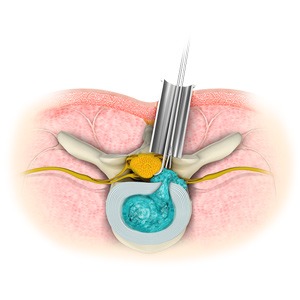
Minimally invasive spine surgery (MISS) is a modern surgical approach that allows spine procedures to be performed through small incisions using specialized instruments and advanced imaging technology.
The goal of MISS is to treat spinal conditions effectively while minimizing disruption to muscles and surrounding tissues, which can lead to less pain and faster recovery compared to traditional open surgery.
What Makes Surgery “Minimally Invasive”?
Traditional spine surgery often requires larger incisions and significant muscle dissection to access the spine.
In minimally invasive spine surgery:
- Small incisions (often less than 1 inch) are used
- Muscles are gently separated rather than cut
- Specialized instruments and tubular retractors create a targeted working channel
- Advanced imaging and visualization guide the procedure
This allows the surgeon to treat the problem while preserving normal anatomy as much as possible.
How Minimally Invasive Spine Surgery Is Performed
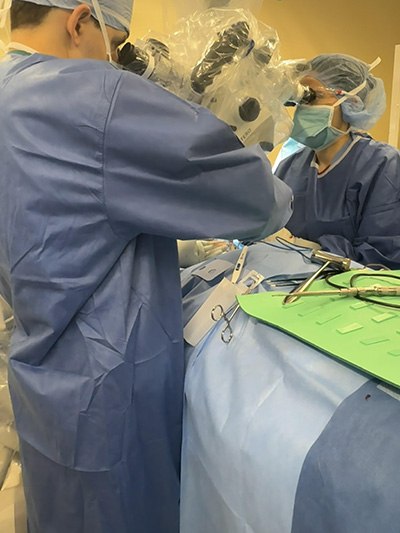
During MISS:
- Small incisions are made over the spine
- Sequential dilators are used to gently separate muscle tissue
- A tubular retractor is placed to maintain a working corridor
- A surgical microscope or endoscope provides magnified visualization
- Specialized instruments are used to perform the procedure
Common procedures performed using minimally invasive techniques include:
- Microdiscectomy
- Laminectomy / decompression
- Spinal fusion (including TLIF and lateral fusion)
In many cases, navigation and robotic assistance may also be used to enhance precision.
Benefits of Minimally Invasive Spine Surgery
Potential advantages of MISS include:
- Smaller incisions and minimal scarring
- Less damage to muscles and soft tissues
- Reduced blood loss during surgery
- Lower risk of infection
- Less postoperative pain
- Shorter hospital stay
- Faster recovery and return to daily activities
These benefits can make a meaningful difference in the overall recovery experience.
When Is Minimally Invasive Surgery Appropriate?
MISS may be an option for a variety of spine conditions, including:
- Herniated discs
- Spinal stenosis
- Degenerative disc disease
- Spondylolisthesis
- Certain spinal deformities
However, not all patients or conditions are suitable for minimally invasive techniques.
The choice depends on:
- The specific diagnosis
- Severity and location of the problem
- Number of spinal levels involved
- Overall spinal alignment
Dr. Shlykov will determine whether a minimally invasive approach is appropriate for your condition.
Minimally Invasive vs Traditional Spine Surgery
Minimally Invasive Surgery
- Smaller incisions
- Less muscle disruption
- Faster recovery in many cases
Traditional (Open) Surgery
- May be necessary for complex or multi-level conditions
- Provides wider exposure for deformity correction or extensive reconstruction
Key Takeaway
Both approaches are effective. The goal is to choose the right technique for the right condition, not simply the smallest incision.
Role of Technology
Minimally invasive spine surgery often incorporates advanced technologies such as:
- Spinal navigation
- Robotic-assisted guidance
- Intraoperative imaging (3D scans, fluoroscopy)
These tools help improve precision, safety, and implant placement accuracy, especially in smaller working spaces.
Recovery After Minimally Invasive Spine Surgery
Recovery is typically faster compared to traditional surgery, though it varies depending on the procedure performed.
General expectations include:
- Early walking after surgery
- Shorter hospital stay (often same-day or next-day discharge)
- Gradual return to activity
Typical timeline:
- Light activity: within days to weeks
- Return to work: often earlier than open surgery
- Full recovery: varies by procedure
Detailed recovery instructions are tailored to your specific surgery.
Risks and Complications
As with any surgery, minimally invasive spine surgery carries potential risks, including:
- Infection
- Bleeding
- Nerve injury
- Dural tear (spinal fluid leak)
- Incomplete decompression or need for additional surgery
While MISS reduces tissue disruption, the underlying surgical risks remain similar to traditional approaches.
Summary
Minimally invasive spine surgery is an advanced approach that allows many spine procedures to be performed through small incisions with less disruption to surrounding tissues. This can lead to reduced pain, faster recovery, and improved patient experience. While not appropriate for every condition, MISS plays an important role in modern spine care and is often combined with advanced technologies to optimize outcomes.
Considering Minimally Invasive Spine Surgery?
If you are exploring treatment options for a spine condition, a consultation can help determine whether a minimally invasive approach is appropriate.
Dr. Shlykov will review your imaging and symptoms to develop a personalized treatment plan tailored to your condition and goals.
Schedule a consultation or Second Opinion to learn more about options.