
What Is Failed Back Surgery Syndrome?
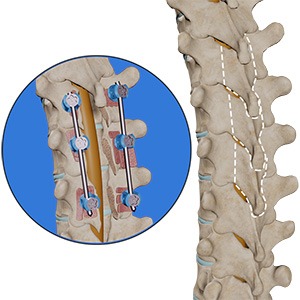
Failed Back Surgery Syndrome (FBSS), also known as post-laminectomy syndrome, refers to persistent or recurrent pain that occurs after spinal surgery.
Despite its name, the term does not necessarily mean that a surgical procedure was performed incorrectly. Rather, it describes a situation in which pain continues or returns after spine surgery, often due to a variety of underlying factors.
Some patients may experience improvement initially after surgery but later develop recurrent symptoms. Others may have persistent pain despite technically successful surgery.
Failed back surgery syndrome most commonly occurs after procedures performed to treat disc herniation, spinal stenosis, or spinal instability.
How Common Is Failed Back Surgery Syndrome?
Persistent pain following spine surgery occurs in a minority of patients but remains an important clinical problem.
Studies suggest:
- Approximately 10–40% of patients may experience persistent or recurrent pain after lumbar spine surgery.
- The risk may increase in patients undergoing multiple prior spine surgeries.
Because of this, careful diagnosis and evaluation are essential to identify the underlying cause of symptoms.
Causes of Failed Back Surgery Syndrome
Several factors may contribute to persistent pain after spine surgery.
Common causes include:
- Recurrent Disc Herniation: A disc that was previously treated may herniate again, causing renewed nerve compression.
- Scar Tissue Formation: Scar tissue may develop around spinal nerves after surgery, sometimes leading to persistent nerve irritation.
- Pseudarthrosis (Spinal Nonunion): If spinal fusion surgery fails to heal into a solid bone, abnormal motion at the fusion site may cause continued pain.
- Adjacent Segment Degeneration: After spinal fusion, the levels above or below the fusion may undergo increased stress and develop degeneration over time.
- Residual or Recurrent Spinal Stenosis: Incomplete decompression or progressive degeneration may lead to persistent narrowing of the spinal canal.
- Nerve Injury or Chronic Nerve Pain: In some cases, nerves may remain sensitive even after the original compression has been relieved.
- Spinal Instability or Deformity: Changes in spinal alignment may also contribute to ongoing pain. Often, more than one factor may be involved.
Symptoms
Symptoms of failed back surgery syndrome may vary depending on the underlying cause.
Common symptoms include:
- Persistent lower back pain
- Pain radiating into the legs (sciatica)
- Burning or tingling sensations
- Numbness or weakness in the legs
- Difficulty standing or walking for extended periods
In some cases, patients may experience chronic nerve pain even after structural problems have been addressed.
Diagnosis
Evaluation of persistent pain after spine surgery requires careful assessment.
Your physician will review:
- Previous surgical history
- Imaging studies from prior procedures
- Current symptoms and pain patterns
- Neurological examination findings
Imaging studies may include:
- MRI scans to evaluate nerve compression, scar tissue, or recurrent disc herniation
- CT scans to assess bone healing and fusion status
- X-rays, including dynamic views to assess spinal stability
In some cases, diagnostic injections may help determine the source of pain.
Identifying the exact cause of symptoms is essential in determining the most appropriate treatment.
Treatment
Treatment depends on the underlying cause of persistent pain.
Many patients benefit from a multidisciplinary approach that combines non-surgical treatments with careful evaluation of surgical options.
Non-Surgical Treatment
Initial treatment may include:
- Physical therapy and rehabilitation
- Anti-inflammatory medications
- Neuropathic pain medications
- Spinal injections
- Lifestyle and activity modification
Pain management specialists may also assist in developing individualized treatment plans.
Surgical Treatment
In some cases, revision spine surgery may be recommended if a correctable structural problem is identified.
Examples include:
- Recurrent disc herniation
- Persistent spinal stenosis
- Spinal instability
- Pseudarthrosis (nonunion) after fusion
Revision surgery is typically considered only after careful evaluation and confirmation of a clear structural cause of symptoms.
Spinal Cord Stimulation
For patients with persistent nerve-related pain without a clear structural cause that does not respond to other treatments, spinal cord stimulation (SCS) may be considered.
Spinal cord stimulators are small implanted devices that deliver mild electrical signals to the spinal cord, which can alter the way pain signals are transmitted to the brain.
The system consists of:
- Thin wires placed near the spinal cord
- A small battery device implanted under the skin
Many patients first undergo a temporary trial stimulation to determine whether the device significantly reduces pain before a permanent device is implanted.
Studies have shown that spinal cord stimulation can provide meaningful pain relief and improved function in selected patients with failed back surgery syndrome, particularly when leg pain is the predominant symptom.