

Stabilizing the SI Joint to Relieve Lower Back and Pelvic Pain
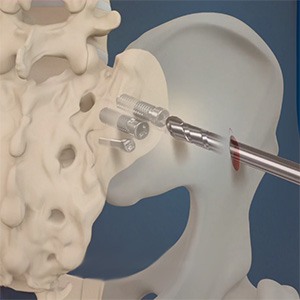
Sacroiliac (SI) joint fusion is a surgical procedure used to treat chronic SI joint pain by stabilizing the joint between the sacrum and pelvis.
When non-surgical treatments fail, SI joint fusion can provide long-term pain relief and improved function by eliminating abnormal motion at the joint.
Understanding the SI Joint
The sacroiliac joints connect:
- The sacrum (base of the spine)
- The ilium (pelvic bones)
These joints:
- Act as shock absorbers
- Transfer forces between the upper body and legs
- Have very limited motion, but that motion can become painful when abnormal
SI joint dysfunction is a common but often underdiagnosed source of low back pain.
What Is SI Joint Dysfunction?
SI joint dysfunction refers to pain originating from the sacroiliac joint, often due to abnormal motion, inflammation, or degeneration.
Common causes include:
- Traumatic injury
- Biomechanical imbalance (leg length differences, pelvic tilt)
- Degenerative arthritis
- Pregnancy-related ligament changes
- Inflammatory conditions such as ankylosing spondylitis
Symptoms of SI Joint Pain
Symptoms can mimic other spine conditions, making diagnosis challenging.
Common symptoms include:
- Pain in the lower back, buttock, or pelvis
- Pain radiating into the groin or thigh
- Pain worse with standing, walking, or transitioning positions
- Pain when sitting or lying on one side for prolonged periods
- Sensation of instability in the pelvis
When Is SI Joint Fusion Recommended?
SI joint fusion is typically considered when:
- Pain is persistent and significantly impacts daily life
- Non-surgical treatments have failed, including:
- Physical therapy
- Medications
- SI joint injections
- Bracing
- Diagnostic injections confirm the SI joint as the pain source
Most patients undergo at least 8–12 weeks of conservative treatment before surgery is considered .
What Is SI Joint Fusion?
SI joint fusion (arthrodesis) is a procedure that:
- Stabilizes the joint
- Reduces painful motion
- Promotes bone growth across the joint
This is achieved using:
- Implants (screws or triangular devices)
- Bone graft material to promote fusion
Over time, the joint becomes permanently stabilized as bone grows across it.
Minimally Invasive SI Joint Fusion
Most SI joint fusions today are performed using a minimally invasive approach.
During the procedure:
- A small incision (typically 2–3 cm) is made in the buttock or the lower back
- Muscles are gently moved aside
- A pathway is created through the ilium into the sacrum
- Implants are placed across the SI joint
- Bone graft may be added to promote fusion
This approach minimizes tissue disruption and allows for faster recovery compared to traditional open surgery .
When Is Fusion Combined With Other Spine Surgery?
In certain cases—particularly during lumbar fusion or deformity correction—SI joint fusion may be performed at the same time.
This is done to:
- Provide additional pelvic stability
- Reduce stress on the SI joint after long spinal constructs
- Improve overall spinal alignment and support
Benefits of SI Joint Fusion
Potential benefits include:
- Reduction in SI joint pain
- Improved ability to stand and walk
- Increased stability of the pelvis
- Improved quality of life
In appropriately selected patients, SI joint fusion can provide meaningful and durable symptom relief.
Recovery After SI Joint Fusion
Recovery is generally straightforward but gradual.
Typical expectations include:
- Same-day or short hospital stay
- Use of a cane or walker for several weeks
- Gradual return to normal activities
Additional recommendations may include:
- Activity modification during early healing
- Physical therapy to restore strength and mobility
- Avoiding heavy lifting during the initial recovery period
Most patients begin to resume normal activities within several weeks, with continued improvement over time .
Risks and Complications
SI joint fusion is generally safe, but potential risks include:
- Infection
- Bleeding
- Nerve or vessel injury
- Implant-related issues
- Persistent pain
- Blood clots
- Anesthesia-related complications
Dr. Shlykov carefully evaluates each patient to minimize these risks.
Summary
Sacroiliac joint fusion is a minimally invasive procedure used to treat chronic SI joint pain when conservative treatments have failed. By stabilizing the joint and eliminating painful motion, the procedure can provide long-term relief and improved function. Careful diagnosis and patient selection are essential to achieving the best outcomes.
Considering SI Joint Fusion?
If you are experiencing persistent lower back or pelvic pain and suspect SI joint dysfunction, a consultation can help determine whether this is the source of your symptoms.
Dr. Shlykov will perform a detailed evaluation and develop a personalized treatment plan tailored to your condition and goals.
Schedule a consultation or Second Opinion to learn more about your options.