
What Is Scoliosis?
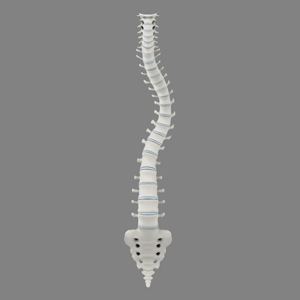
Scoliosis is a condition in which the spine develops an abnormal sideways curvature. Instead of appearing straight when viewed from behind, the spine curves to the side and may also rotate. This can cause the spine to resemble the shape of a “C” or “S” rather than a straight vertical line.
Scoliosis most commonly affects the thoracic spine (upper and mid back) or lumbar spine (lower back). The severity of the curve can vary widely. Some people have very mild curves that cause few symptoms, while others may develop more significant deformity that affects posture, balance, and function.
Scoliosis can occur at any age, though the most common form begins during adolescence.
Types of Scoliosis
Scoliosis can occur for several different reasons. The most common types include adolescent idiopathic scoliosis, adult idiopathic scoliosis, and degenerative scoliosis, though other medical conditions may also cause spinal curvature.
Adolescent Idiopathic Scoliosis
Adolescent idiopathic scoliosis (AIS) is the most common form of scoliosis and typically develops during the teenage growth years. The term “idiopathic” means that the exact cause is unknown, though research suggests a genetic component.
AIS affects approximately 2–3% of adolescents, though most curves remain mild and do not require surgery.
Common signs include:
- Uneven shoulders
- One shoulder blade appearing more prominent
- Uneven waistline
- Rib prominence when bending forward
Many adolescents with scoliosis have no pain and are diagnosed during school screening or routine physical exams.
Adult Idiopathic Scoliosis
Some individuals who developed scoliosis during adolescence continue to have curvature of the spine into adulthood. This is referred to as adult idiopathic scoliosis.
Over time, the spinal curve may slowly progress as the discs and joints of the spine undergo normal aging and degeneration. Adults with longstanding scoliosis may develop symptoms such as:
- Chronic back pain
- Fatigue when standing or walking
- Progressive spinal imbalance
- Nerve compression causing leg pain or numbness
Degenerative Scoliosis
Degenerative scoliosis, also called adult-onset scoliosis, develops later in life due to age-related changes in the spine.
Degeneration of spinal discs and facet joints can cause the spine to gradually curve sideways and lose normal alignment. This type of scoliosis is most commonly seen in adults over age 50.
Degenerative scoliosis may cause:
- Lower back pain
- Difficulty standing upright
- Leg pain due to nerve compression
- Spinal imbalance
In many cases, degenerative scoliosis occurs together with other spinal conditions such as spinal stenosis, degenerative disc disease, or spondylolisthesis.
Other Causes of Scoliosis
While idiopathic and degenerative scoliosis are the most common forms, other conditions may also cause abnormal spinal curvature.
Congenital Scoliosis
Congenital scoliosis occurs when vertebrae do not form normally during fetal development. These structural abnormalities can lead to spinal curvature that becomes noticeable during childhood.
Neuromuscular Scoliosis
Neuromuscular conditions that affect muscle control and balance can lead to scoliosis. Examples include:
- Cerebral palsy
- Muscular dystrophy
- Spina bifida
- Spinal cord injury
Functional (Nonstructural) Scoliosis
In some cases, the spine appears curved due to other issues such as:
- Leg length differences
- Muscle spasms
- Postural imbalance
In these situations, the spine itself is structurally normal.
Symptoms of Scoliosis
Symptoms depend on the cause and severity of the spinal curve.
Common symptoms include:
- Uneven shoulders or hips
- Prominent shoulder blade or rib cage
- Visible spinal curvature
- Back pain or fatigue
- Difficulty standing upright
- Muscle imbalance
In severe cases, scoliosis may affect overall posture, balance, and mobility. Rarely, very large curves in the thoracic spine may affect lung function.
Diagnosis
Diagnosis begins with a medical history and physical examination.
Your physician may evaluate:
- Spinal alignment and posture
- Shoulder and hip symmetry
- Rib prominence with forward bending (Adam’s test)
- Neurological function
Imaging studies are used to measure the spinal curve and evaluate the underlying cause.
Common diagnostic tests include:
- Standing spine X-rays, which measure the curve using the Cobb angle
- MRI scans, which evaluate the spinal cord and nerves
- CT scans, which provide detailed images of the bones
The severity of scoliosis is typically measured in degrees of curvature.
Treatment
Treatment depends on several factors including:
- Age of the patient
- Severity of the spinal curve
- Symptoms
- Risk of curve progression
Non-Surgical Treatment
Many patients with scoliosis can be treated without surgery.
Common non-operative treatments include:
- Observation: Small curves may simply be monitored with periodic imaging to ensure they do not progress.
- Bracing: In adolescents whose bones are still growing, a brace may be used to help prevent the curve from worsening.
- Physical Therapy: Exercise programs can help improve posture, strengthen the core muscles, and reduce discomfort.
- Pain Management: Medications, activity modification, or spinal injections may help relieve symptoms in adults.
Surgical Treatment
Surgery may be recommended when:
- The spinal curve becomes severe
- Symptoms significantly affect quality of life
- Progressive deformity occurs
- Nerve compression develops
Surgical treatment typically involves spinal realignment and stabilization using rods, screws, and spinal fusion.
The goal of surgery is to correct spinal alignment, relieve nerve compression, and improve overall posture and balance.
Results of Surgical vs Non-Surgical Treatment
(Adult Symptomatic Lumbar Scoliosis Study – ASLS)
One of the largest studies examining treatment for adult scoliosis is the Adult Symptomatic Lumbar Scoliosis (ASLS) study, which compared outcomes between surgical and non-surgical treatment.
Key findings from this study include:
- Patients who underwent surgical correction experienced significantly greater improvement in pain and function compared with those treated without surgery.
- Improvements were seen in measures such as pain relief, walking ability, and overall quality of life.
- Many patients treated non-operatively continued to have persistent symptoms over time.
In simple terms, the study showed that patients with significant symptoms and spinal deformity often experience meaningful improvement after surgery, though surgery also carries greater risks and requires careful patient selection.
For this reason, treatment decisions are individualized based on symptom severity, spinal alignment, and patient goals.
Summary
Scoliosis is a condition in which the spine develops an abnormal sideways curvature. It can occur during adolescence, persist into adulthood, or develop later in life due to degenerative changes in the spine. While many individuals with scoliosis have mild curves that require only observation or conservative treatment, others may develop symptoms such as pain, fatigue, and difficulty maintaining upright posture. Treatment depends on the severity of the curve and symptoms and may range from monitoring and physical therapy to surgical correction in more advanced cases.