
Advanced Treatment for Chronic Nerve-Related Pain
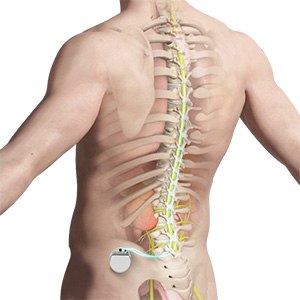
Spinal cord stimulation (SCS) is an advanced, minimally invasive treatment used to manage chronic nerve-related pain when other treatments—including surgery—have not provided sufficient relief.
SCS works by delivering mild electrical signals to the spinal cord, which help block or modify pain signals before they reach the brain.
Dr. Shlykov works closely with pain management specialists to identify appropriate candidates and coordinate care for patients who may benefit from spinal cord stimulation.
How Spinal Cord Stimulation Works
Spinal cord stimulation involves placing small electrodes in the epidural space near the spinal cord.
These electrodes:
- Deliver controlled electrical signals
- Interfere with pain signal transmission
- Replace pain with a more tolerable sensation or reduce pain perception
Modern systems are programmable and customizable to each patient’s specific pain pattern.
Conditions Treated with Spinal Cord Stimulation
SCS is most effective for chronic neuropathic (nerve-related) pain.
Common indications include:
- Persistent back or leg pain after spine surgery (failed back surgery syndrome / post-laminectomy syndrome)
- Chronic radicular pain (sciatica) without a clear structural cause
- Diabetic peripheral neuropathy
- Peripheral neuropathy from other causes
- Complex Regional Pain Syndrome (CRPS)
- Nerve-related pain from prior injury or surgery
- Epidural fibrosis (scar tissue around nerves)
SCS is typically considered when:
- Pain is chronic and function-limiting
- Imaging does not show a clear surgical target
- Other treatments (medications, injections, therapy) have failed
The SCS Trial: A Key Step
Before permanent implantation, patients undergo a temporary trial to determine if SCS is effective.
During the trial:
- Electrodes are placed using X-ray guidance
- The procedure is typically done in an outpatient setting
- The system is programmed to target your specific pain
The trial usually lasts:
- 3 to 5 days
During this time, patients evaluate:
- Pain relief
- Improvement in function
- Changes in sleep or activity level
A successful trial is typically defined as meaningful pain relief and improved function.
What Does the Trial Feel Like?
Patients may experience:
- A gentle tingling sensation (in some systems)
- Or, with newer systems, pain relief without noticeable sensation
Many patients report:
- Reduced pain
- Improved mobility
- Decreased reliance on pain medications
Permanent Implantation
If the trial is successful:
- A permanent system is implanted in an outpatient surgical setting
- Electrodes are positioned in the same area as the trial
- A small battery (similar to a pacemaker) is placed under the skin
The system can be adjusted and programmed over time to optimize pain control.
Benefits of Spinal Cord Stimulation
Potential benefits include:
- Reduction in chronic nerve-related pain
- Improved function and quality of life
- Decreased reliance on pain medications
- Reversible and adjustable therapy
- Avoidance of additional spine surgery in selected cases
Role of SCS vs Surgery
Spinal cord stimulation is not a replacement for surgery when a clear structural problem exists.
Instead, it is used when:
- There is no clear surgical target
- Prior surgery has not relieved symptoms
- Pain is primarily nerve-related rather than mechanical
Dr. Shlykov carefully evaluates patients to determine whether:
- Additional spine surgery
- Or neuromodulation (SCS)
is the most appropriate next step.
Recovery After SCS Implantation
Recovery is typically straightforward:
- Outpatient procedure in most cases
- Mild soreness at incision sites
- Gradual return to activity
Patients receive guidance on:
- Activity restrictions during early healing
- Device use and programming
- Follow-up care and adjustments
Risks and Considerations
Spinal cord stimulation is generally safe, but potential risks include:
- Infection
- Bleeding
- Lead migration (movement of electrodes)
- Device malfunction
- Incomplete pain relief
Careful patient selection and trial evaluation help optimize outcomes.
Summary
Spinal cord stimulation is an advanced, minimally invasive treatment for chronic nerve-related pain. By modifying how pain signals are transmitted to the brain, SCS can provide meaningful relief for patients who have not improved with other treatments or prior surgery. A temporary trial allows patients to determine effectiveness before permanent implantation. Collaboration between spine surgery and pain management ensures a comprehensive, personalized approach to care.
Considering Spinal Cord Stimulation?
If you are experiencing persistent nerve-related pain—especially after spine surgery or without a clear structural cause—a consultation can help determine whether spinal cord stimulation is appropriate.
Dr. Shlykov works closely with pain management specialists to develop a personalized, multidisciplinary treatment plan tailored to your needs.
Schedule a consultation or second opinion to explore your options.