
What is Spondylolysis?
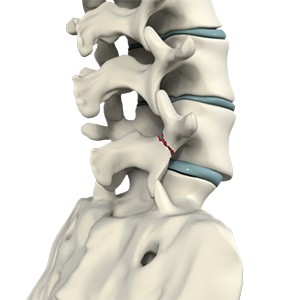
Spondylolysis is a stress fracture in a vertebra of the spine. The fracture most commonly occurs in a small portion of the vertebra called the pars interarticularis, which connects the upper and lower facet joints of the spine. If the fracture weakens the bone significantly, it may progress to spondylolisthesis, a condition in which one vertebra slips forward relative to the vertebra below it.
Spondylolysis is a common cause of low back pain in children and adolescents, particularly those who participate in sports that involve repetitive bending or extension of the spine, such as football, gymnastics, weightlifting, and diving.
The condition is estimated to occur in approximately 5–7% of the general population, but the prevalence can be significantly higher in young athletes. In certain sports that place repeated stress on the lower back, rates as high as 15–30% have been reported.
Causes of Spondylolysis
Spondylolysis develops due to a defect or stress fracture in the pars interarticularis of the lumbar spine. This portion of the vertebra is subjected to repetitive stress during activities that involve frequent spinal extension and rotation.
Several factors may contribute to the development of spondylolysis:
- Genetic predisposition or thinner vertebral bones
- Repetitive strain from sports or physical activity
- Rapid growth during adolescence
- Structural differences in spinal alignment
Children born with thinner vertebrae may be more prone to developing stress fractures. Over time, repetitive loading of the lower back can weaken the pars interarticularis and lead to fracture.
Symptoms of Spondylolysis
Some individuals may initially have no symptoms, particularly early in the condition. When symptoms occur, they most commonly involve lower back pain, especially during periods of rapid growth or increased athletic activity.
Common symptoms include:
- Lower back pain that worsens with physical activity
- Pain during bending backward or twisting movements
- Muscle tightness in the lower back or hamstrings
- Pain that may feel similar to a muscle strain
Symptoms often become more noticeable during adolescent growth spurts or with intense sports participation.
Risk Factors for Spondylolysis
Risk factors that may increase the likelihood of developing spondylolysis include:
- Family history of spinal problems
- Repetitive trauma to the lower back
- Increased lumbar lordosis (swayback posture)
- Congenital conditions such as spina bifida occulta
- Participation in sports such as football, gymnastics, and weightlifting that require frequent spinal extension
Young athletes who train intensively are at higher risk.
Complications of Spondylolysis
If left untreated, spondylolysis may lead to complications such as:
- Spondylolisthesis, where the vertebra slips forward
- Reduced mobility and physical activity
- Weight gain due to inactivity
- Loss of bone density or muscle strength
- Chronic back pain
In more advanced cases, nerve compression may occur, which can cause symptoms including:
- Numbness or tingling in the legs
- Weakness in the legs
- Rarely, bowel or bladder dysfunction
Diagnosis of Spondylolysis
Diagnosis begins with a detailed medical history and physical examination. Your physician will assess spinal movement, areas of tenderness, and neurological function.
Imaging tests are often used to confirm the diagnosis, including:
- X-rays
- CT scans
- MRI scans
These studies help identify the stress fracture and determine whether the vertebra has shifted or if surrounding nerves are affected.
Treatment of Spondylolysis
Treatment for spondylolysis is usually conservative, particularly when the condition is diagnosed early. The goal is to relieve pain, allow the fracture to heal, and restore normal activity.
Conservative Treatment Options
Rest
Avoiding strenuous physical activity and sports that place stress on the lower back allows the fracture to heal.
Medications
Non-steroidal anti-inflammatory drugs (NSAIDs) may be used to reduce pain and inflammation. In some cases, epidural steroid injections may be recommended to reduce nerve irritation.
Physical Therapy
A structured rehabilitation program helps strengthen the abdominal and back muscles, improve flexibility, and restore normal motion of the spine.
Bracing
In some cases, a brace or back support may be used to stabilize the spine while the fracture heals.
Surgical Treatment
Surgery is rarely required, but it may be recommended if symptoms persist despite conservative treatment or if the condition progresses to spondylolisthesis.
Two main surgical approaches may be considered:
Pars Repair
In selected patients—particularly younger individuals with isolated pars fractures and minimal vertebral slippage—a procedure called pars repair may be performed.
This surgery stabilizes the fractured portion of the vertebra while preserving the motion of the spinal segment. The surgeon repairs the defect using screws, rods, or other fixation techniques to allow the bone to heal.
Because the spinal segment is preserved, pars repair may allow patients to maintain more normal spinal motion compared with fusion surgery.
Spinal Fusion
If there is significant vertebral slippage or spinal instability, spinal fusion may be recommended. During this procedure, two adjacent vertebrae are permanently joined together to stabilize the spine.
Bone grafts are placed between the vertebrae to promote bone healing and fusion. Metal implants such as screws and rods may also be used to stabilize the spine while the bone heals.
Your surgeon will determine the most appropriate surgical option based on the severity of the condition, the patient’s age, symptoms, and spinal stability.
Prevention of Spondylolysis
Although spondylolysis cannot always be prevented, certain measures may reduce the risk:
- Maintaining a healthy body weight to reduce stress on the spine
- Strengthening the core and back muscles
- Gradually increasing sports training intensity
- Maintaining flexibility in the hips and hamstrings
- Using proper lifting and athletic techniques
These strategies help support spinal health and reduce stress on the lower back.
Summary
Spondylolysis is a stress fracture of the pars interarticularis, most commonly affecting adolescents and young athletes who participate in sports involving repetitive spinal extension. Although the condition can cause lower back pain, many patients improve with conservative treatment such as rest, physical therapy, and activity modification. In cases where symptoms persist or the condition progresses to vertebral slippage, surgical options such as pars repair or spinal fusion may be considered to stabilize the spine and relieve symptoms.