

Stabilizing the Thoracic Spine to Relieve Pain and Protect the Spinal Cord
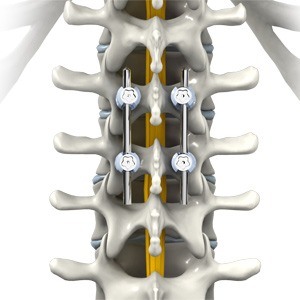
Thoracic fusion is a surgical procedure used to stabilize the spine in the mid-back (thoracic spine). It is performed to treat conditions that cause instability, deformity, or compression of the spinal cord and nerves.
In this procedure, two or more vertebrae are joined together using bone graft and instrumentation (screws and rods) to create a stable segment of the spine.
Understanding the Thoracic Spine
The thoracic spine consists of 12 vertebrae (T1–T12) and is connected to the rib cage, providing stability and protection for the spinal cord.
While this region is naturally more stable than the neck or lower back, certain conditions can disrupt that stability or cause compression of neural structures, requiring surgical intervention.
When Is Thoracic Fusion Recommended?
Thoracic fusion may be recommended when there is:
- Spinal instability due to degeneration or injury
- Spinal cord compression requiring decompression and stabilization
- Thoracic disc herniation with instability
- Spinal deformity (such as kyphosis or scoliosis)
- Fractures of the thoracic spine
- Spinal tumors or infections affecting structural integrity
- Revision spine surgery
In many cases, thoracic fusion is performed in combination with decompression procedures such as laminectomy or discectomy.
What Does Thoracic Fusion Treat?
Thoracic fusion is used to treat a variety of conditions, including:
- Thoracic spinal stenosis
- Thoracic myelopathy
- Spinal deformity (kyphosis or scoliosis)
- Traumatic fractures
- Spinal tumors or infections
- Degenerative or structural instability
The goal is to stabilize the spine, protect the spinal cord, and prevent progression of the condition.
How the Procedure Is Performed
Thoracic fusion is typically performed through a posterior (back) approach, although other approaches may be used depending on the condition.
During the procedure:
- An incision is made in the mid-back
- The spine is exposed
- Decompression (if needed) is performed to relieve pressure on the spinal cord or nerves
- Screws and rods are placed to stabilize the spine
- Bone graft is placed to promote fusion between vertebrae
Over time, the bone heals and forms a solid bridge between the vertebrae, creating long-term stability.
Role of Bone Healing (Fusion)
Fusion is a biological process that occurs gradually over time.
Bone graft material is used to:
- Promote bone growth between vertebrae
- Create a stable, fused segment
- Support long-term spinal stability
Fusion typically develops over several months, and healing may be influenced by factors such as smoking, nutrition, and overall health.
Benefits of Thoracic Fusion
Potential benefits include:
- Stabilization of the spine
- Protection of the spinal cord
- Relief of nerve or spinal cord compression (when combined with decompression)
- Correction or prevention of deformity progression
- Reduction in pain related to instability
In many cases, the goal is to prevent worsening of neurological function, while also improving symptoms.
Recovery After Thoracic Fusion
Recovery varies depending on the extent of surgery and the number of levels treated.
General expectations include:
- Hospital stay of 2–5 days in many cases
- Early mobilization and walking
- Gradual return to daily activities
Patients may experience:
- Postoperative soreness and stiffness
- Temporary limitations in activity
- Gradual improvement over time
Return to work and activity depends on the procedure and individual recovery.
Activity and Long-Term Considerations
Because fusion eliminates motion at treated levels:
- Some loss of flexibility in the thoracic spine is expected
- Most patients adapt well and maintain good overall function
- Adjacent segments may experience increased stress over time
Dr. Shlykov provides personalized guidance on activity progression and long-term expectations.
Risks and Complications
As with any spine surgery, thoracic fusion carries potential risks, including:
- Infection
- Bleeding
- Nerve or spinal cord injury
- Failure of fusion (pseudarthrosis)
- Hardware loosening or failure
- Persistent pain
- Need for additional surgery
Careful surgical planning and technique are essential to minimize these risks.
When Is Fusion Necessary?
Not all thoracic spine conditions require fusion.
Fusion is typically recommended when:
- The spine is unstable
- Significant bone removal is required during decompression
- There is deformity or risk of progression
- Structural support is needed to protect the spinal cord
In select cases, decompression alone may be sufficient, but fusion is added when stability is a concern.
Summary
Thoracic fusion is a surgical procedure used to stabilize the mid-back and protect the spinal cord in conditions involving instability, deformity, or compression. By joining vertebrae together and providing structural support, thoracic fusion helps prevent progression of disease and improves overall spinal stability. It is often performed in combination with decompression procedures and plays an important role in treating complex thoracic spine conditions.
Considering Thoracic Fusion?
If you have been diagnosed with a thoracic spine condition requiring stabilization, a consultation can help determine the most appropriate treatment approach.
Dr. Shlykov will review your imaging and develop a personalized plan tailored to your condition and goals.
Schedule a consultation or Second Opinion to learn more about options.