
Surgical Treatment for Thoracic Spinal Cord and Nerve Compression
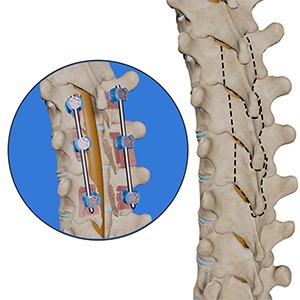
Thoracic laminectomy and discectomy are surgical procedures used to treat compression of the spinal cord or nerves in the thoracic spine (mid-back).
Although thoracic spine conditions are less common than cervical or lumbar problems, they can be more serious, particularly when the spinal cord is involved. These procedures are designed to relieve pressure on the spinal cord and nerves, improve symptoms, and prevent neurological decline.
Understanding the Problem
The thoracic spine consists of 12 vertebrae (T1–T12) and plays an important role in supporting the rib cage and protecting the spinal cord.
Conditions that can cause compression in the thoracic spine include:
- Thoracic disc herniation
- Spinal stenosis
- Bone spurs (osteophytes)
- Ligament thickening or calcification
- Trauma, tumors, or deformity
Because the spinal cord runs through the thoracic spine, compression in this region can lead to more serious symptoms than in other parts of the spine.
Symptoms of Thoracic Spinal Compression
Symptoms vary depending on the location and severity of compression, but may include:
- Mid-back pain
- Pain that wraps around the chest or ribs
- Numbness or tingling in the torso or legs
- Weakness in the legs
- Difficulty with balance or walking
- Changes in coordination
- In severe cases, bowel or bladder dysfunction
Symptoms related to the spinal cord (thoracic myelopathy) often require timely surgical evaluation.
What Is Thoracic Laminectomy and Discectomy?
These procedures are often performed together depending on the underlying condition.
Thoracic Laminectomy
- Removal of the lamina (back part of the vertebra)
- Creates more space for the spinal cord
- Relieves pressure from spinal stenosis or thickened ligaments
Thoracic Discectomy
- Removal of a herniated thoracic disc
- Relieves pressure on the spinal cord or nerve roots
- May be performed through different surgical approaches depending on disc location
Surgical Approaches
Thoracic spine surgery can be more complex due to the surrounding anatomy.
Depending on the condition, surgery may be performed through:
- Posterior approach (from the back)
- Lateral or minimally invasive approach
- Anterior approach (from the side or chest, in select cases)
The choice of approach depends on the location of compression, anatomy, and surgical goals.
When Is Surgery Recommended?
Thoracic laminectomy and/or discectomy may be recommended when:
- There is spinal cord compression
- Neurological symptoms such as weakness or balance issues are present
- Symptoms are progressive
- Non-surgical treatment has failed
- Imaging confirms a clear source of compression
Because thoracic spinal cord compression can lead to permanent deficits, surgery is often recommended when symptoms are significant or worsening.
Role of Fusion
In some cases, spinal fusion may be performed in addition to decompression.
Fusion may be considered when:
- There is spinal instability
- Significant bone removal is required
- Deformity is present
- Multiple levels are treated
Fusion involves placing screws and rods to stabilize the spine and promote bone healing between vertebrae.
Benefits of Surgery
Potential benefits include:
- Relief of spinal cord or nerve compression
- Improvement or stabilization of neurological symptoms
- Reduction in pain
- Prevention of further neurological decline
The primary goal—especially in cases involving the spinal cord—is often to prevent worsening, though many patients also experience improvement.
Recovery After Surgery
Recovery depends on the extent of surgery and individual patient factors.
General expectations include:
- Hospital stay of 1–3 days in many cases
- Early mobilization and walking
- Gradual return to daily activities
Recovery of neurological function may take time and depends on:
- Severity of compression
- Duration of symptoms prior to surgery
Some symptoms may improve quickly, while others may recover gradually.
Risks and Considerations
Thoracic spine surgery carries risks, including:
- Infection
- Bleeding
- Nerve or spinal cord injury
- Cerebrospinal fluid (CSF) leak
- Persistent symptoms
- Need for additional surgery
Because of the proximity to the spinal cord, these procedures require careful surgical planning and technique.
Summary
Thoracic laminectomy and discectomy are specialized procedures used to treat spinal cord and nerve compression in the mid-back. These surgeries relieve pressure on critical neural structures and are often recommended when neurological symptoms are present or progressing. In selected cases, fusion may be performed to provide stability. Early diagnosis and appropriate surgical treatment are important to prevent permanent neurological deficits and optimize outcomes.
Considering Thoracic Spine Surgery?
If you have been diagnosed with a thoracic disc herniation, spinal stenosis, or spinal cord compression, a consultation can help determine the most appropriate treatment approach.
Dr. Shlykov will review your imaging and symptoms to develop a personalized surgical or non-surgical treatment plan.
Schedule a consultation or Second Opinion to learn more about options.