
What Is Isthmic Spondylolisthesis?
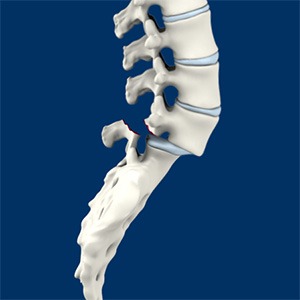
Isthmic spondylolisthesis occurs when one vertebra slips forward relative to the vertebra below it due to a defect or fracture in a portion of the vertebra called the pars interarticularis.
This condition often develops from spondylolysis, a stress fracture of the pars interarticularis. When the fracture weakens the vertebra sufficiently, it may allow the vertebra to shift forward.
Isthmic spondylolisthesis most commonly occurs in the lower lumbar spine, particularly at the L5–S1 level.
The condition often develops during childhood or adolescence, but symptoms may not appear until adulthood.
Causes of Isthmic Spondylolisthesis
Isthmic spondylolisthesis occurs when a defect in the pars interarticularis weakens the structural stability of the vertebra.
Common contributing factors include:
- Stress fractures of the pars interarticularis
- Repetitive spinal extension during sports
- Genetic predisposition
- Structural differences in spinal anatomy
Sports that involve repetitive back extension—such as gymnastics, football, and weightlifting—are associated with a higher risk of developing pars fractures.
Symptoms
Symptoms vary depending on the degree of vertebral slippage and nerve compression.
Common symptoms include:
- Lower back pain
- Tightness in the hamstrings
- Pain radiating into the buttocks or legs
- Numbness or tingling in the legs
- Muscle weakness in the legs
In more advanced cases, nerve compression may cause lumbar radiculopathy, which results in leg pain similar to sciatica.
Grading of Isthmic Spondylolisthesis
As with other forms of vertebral slippage, the condition is classified based on the degree of slippage:
- Grade I: 0–25% slippage
- Grade II: 25–50% slippage
- Grade III: 50–75% slippage
- Grade IV: 75–100% slippage
Higher-grade slips are less common but may lead to greater instability and neurological symptoms.
Diagnosis
Diagnosis begins with a physical examination and medical history.
Your physician may evaluate:
- Spinal motion and posture
- Hamstring tightness
- Neurological function in the legs
Imaging studies are used to confirm the diagnosis.
Common imaging tests include:
- X-rays, which show vertebral slippage
- MRI scans, which evaluate nerve compression
- CT scans, which help identify defects in the pars interarticularis
Treatment
Treatment depends on symptom severity and the degree of vertebral instability.
Non-Surgical Treatment
Many patients initially improve with conservative treatment options such as:
- Physical therapy and core strengthening
- Anti-inflammatory medications
- Activity modification
- Epidural steroid injections
These treatments may reduce inflammation and improve stability of the spine.
Surgical Treatment
Surgery may be recommended when symptoms persist or when significant nerve compression or instability is present.
Common surgical procedures include:
- Lumbar decompression surgery to relieve nerve pressure
- Spinal fusion to stabilize the vertebral segment
The goal of surgery is to relieve nerve compression, restore spinal stability, and reduce pain.
Summary
Isthmic spondylolisthesis occurs when a defect in the pars interarticularis allows one vertebra to slip forward relative to the vertebra below it. This condition often develops from a stress fracture known as spondylolysis and may cause back pain or nerve compression. Many patients improve with conservative treatment, but surgery may be recommended when symptoms persist or when spinal instability causes nerve compression.